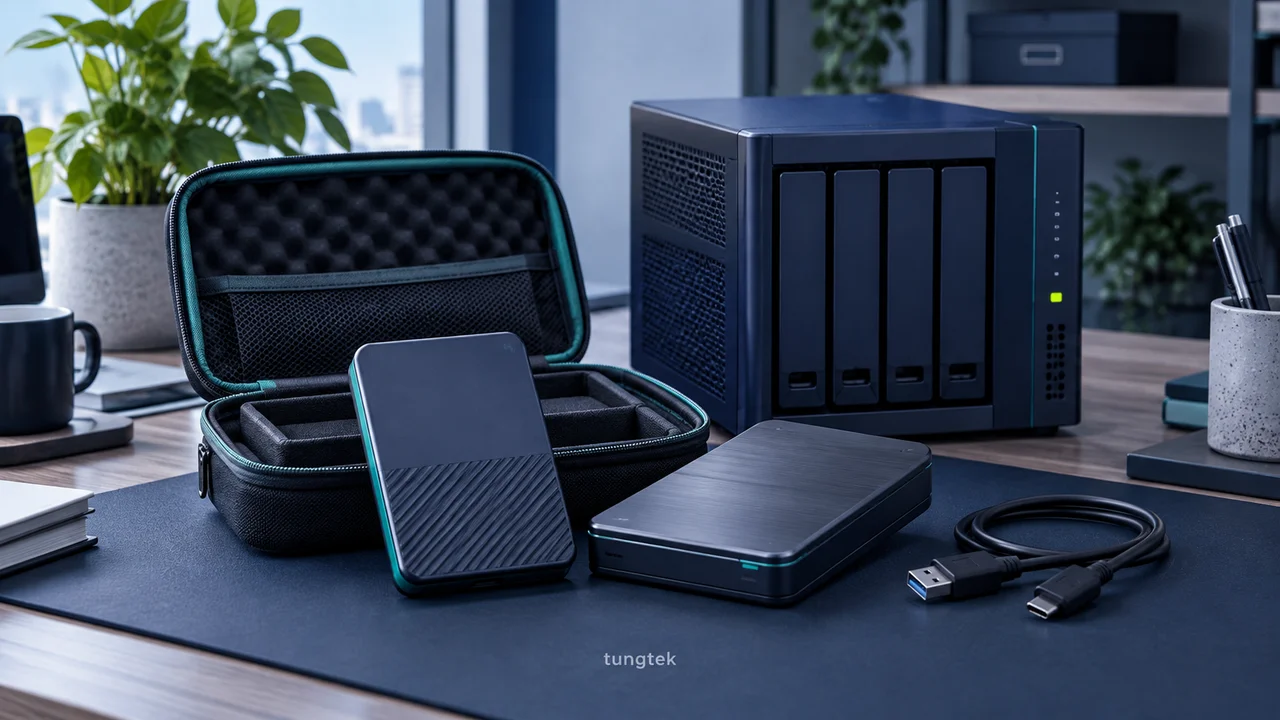
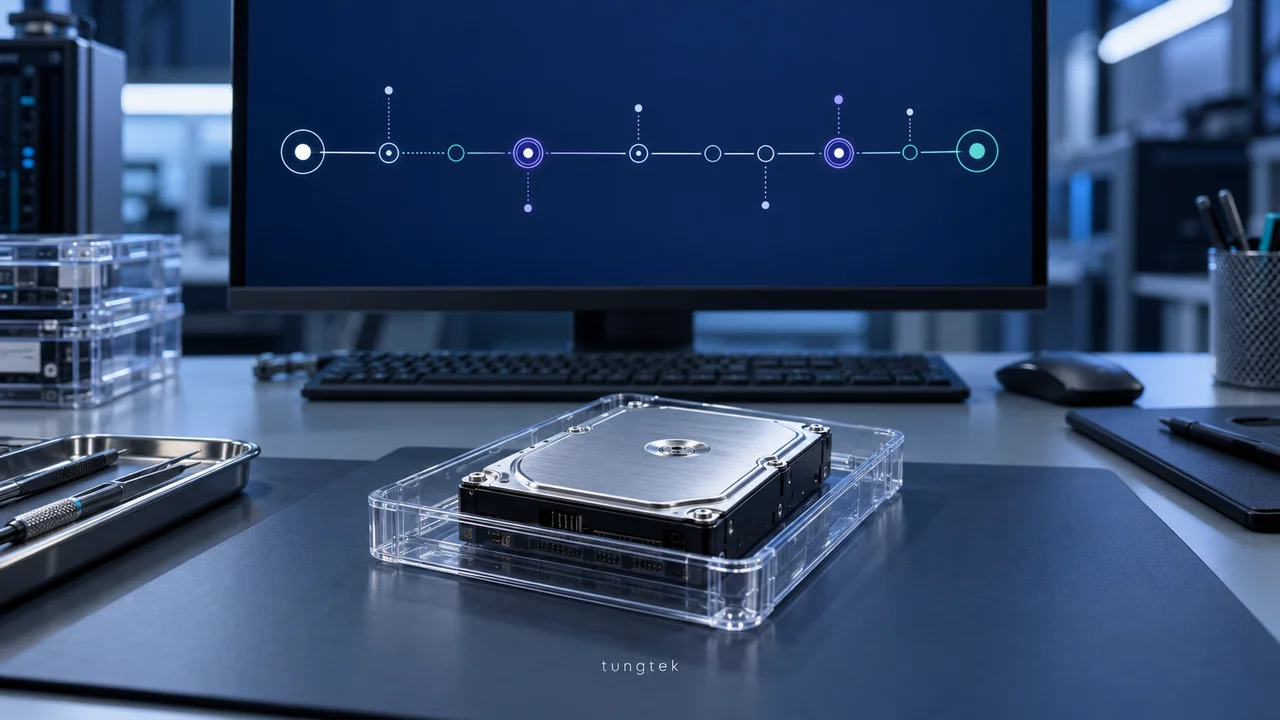
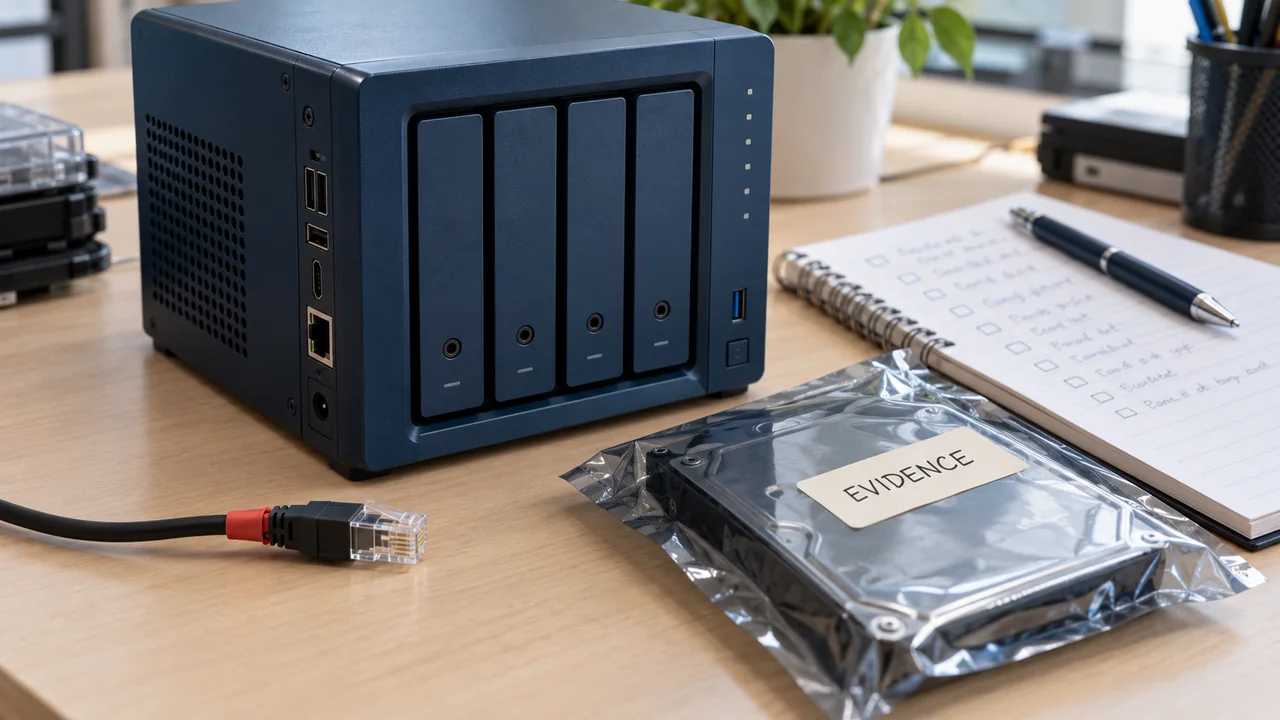
Ticket #1355: what is known and unknown about a NAS case
Read TUNGTEK's public NAS record through its evidence: received devices, attribution limits and missing data.
Updated: · Vietnam time (UTC+7)
Case information is attributed to TUNGTEK's publication. Ransomware.VN does not have original disk images or logs for independent verification.
The consolidated article retains its URL. The supplied original is dated 03/10/2026; its No.Ransomware.VN URL is a proposed path, not proven to have been published.
Source record before consolidation
Original title (English translation): NAS ransomware attack: hacker demands USD 74,000
Source: TUNGTEK — archived HTML supplied by the website owner · Original date: (the source records only the date)
The original is retained for comparison. The update history below records changes to sources, scope and assessments.
Profile information
- System
- NAS / RAID — according to TUNGTEK's publication
- Device
- Synology HAT3300-4T
- Total system capacity
- Not disclosed
- Extension / ransom note
- Insufficient data for publication in this profile
- Timeline
- 03/10/2026: case information appears in TUNGTEK's source
- Forensic artifacts
- No logs, disk images or evidence hashes disclosed
- Extent of damage
- Under assessment
- Ransomware families
- Unidentified — Unknown
- RFC / recovery prospects
- Not disclosed
- Recovery outcome
- Not disclosed
Publicly disclosed evidence
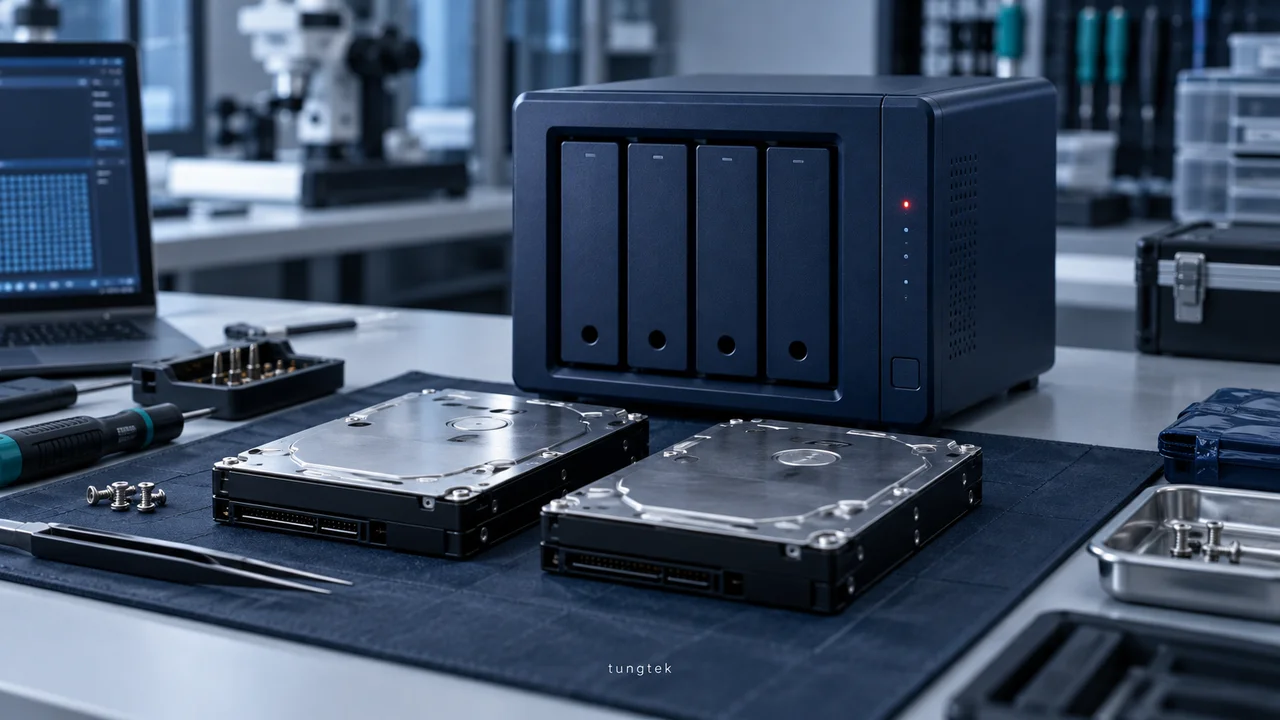
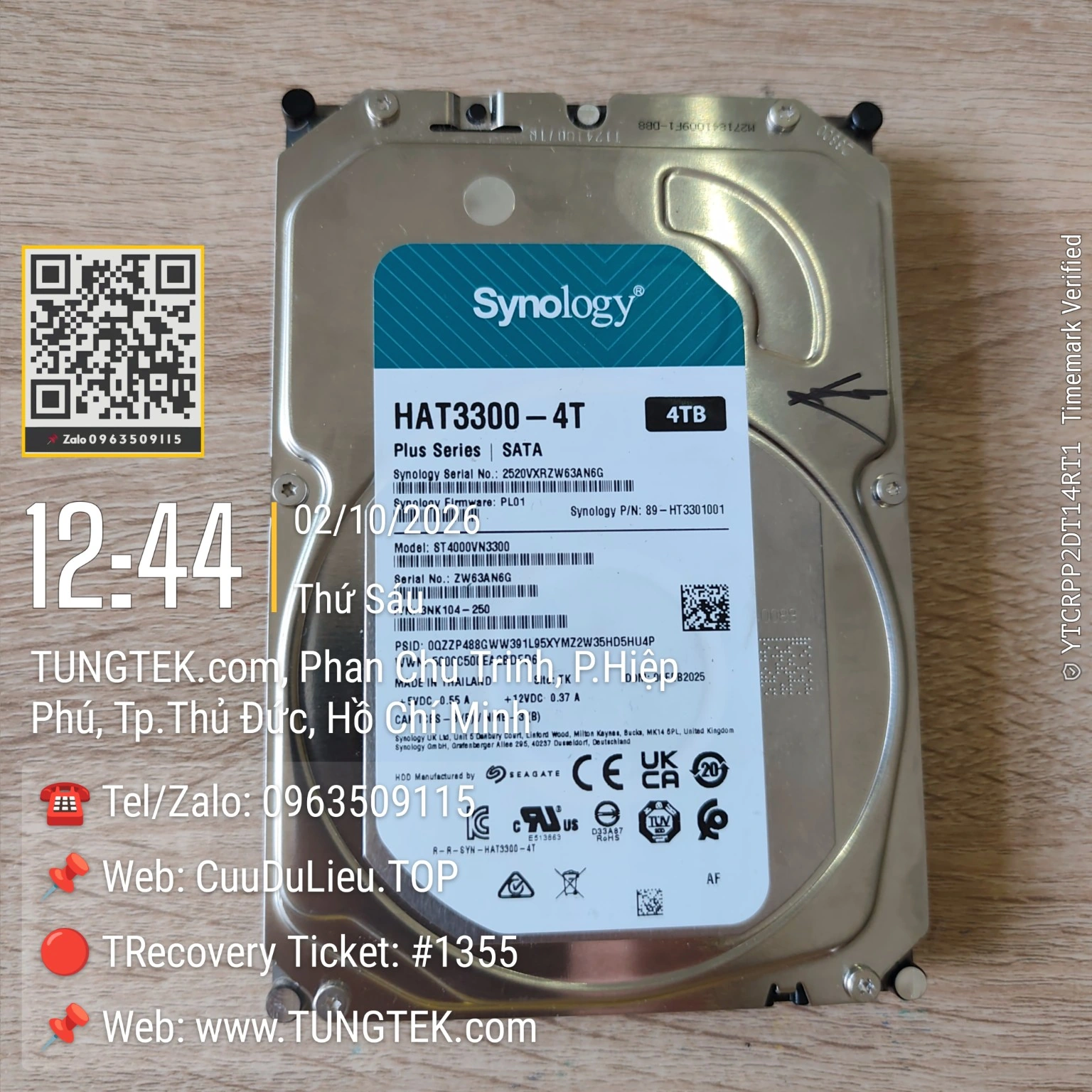
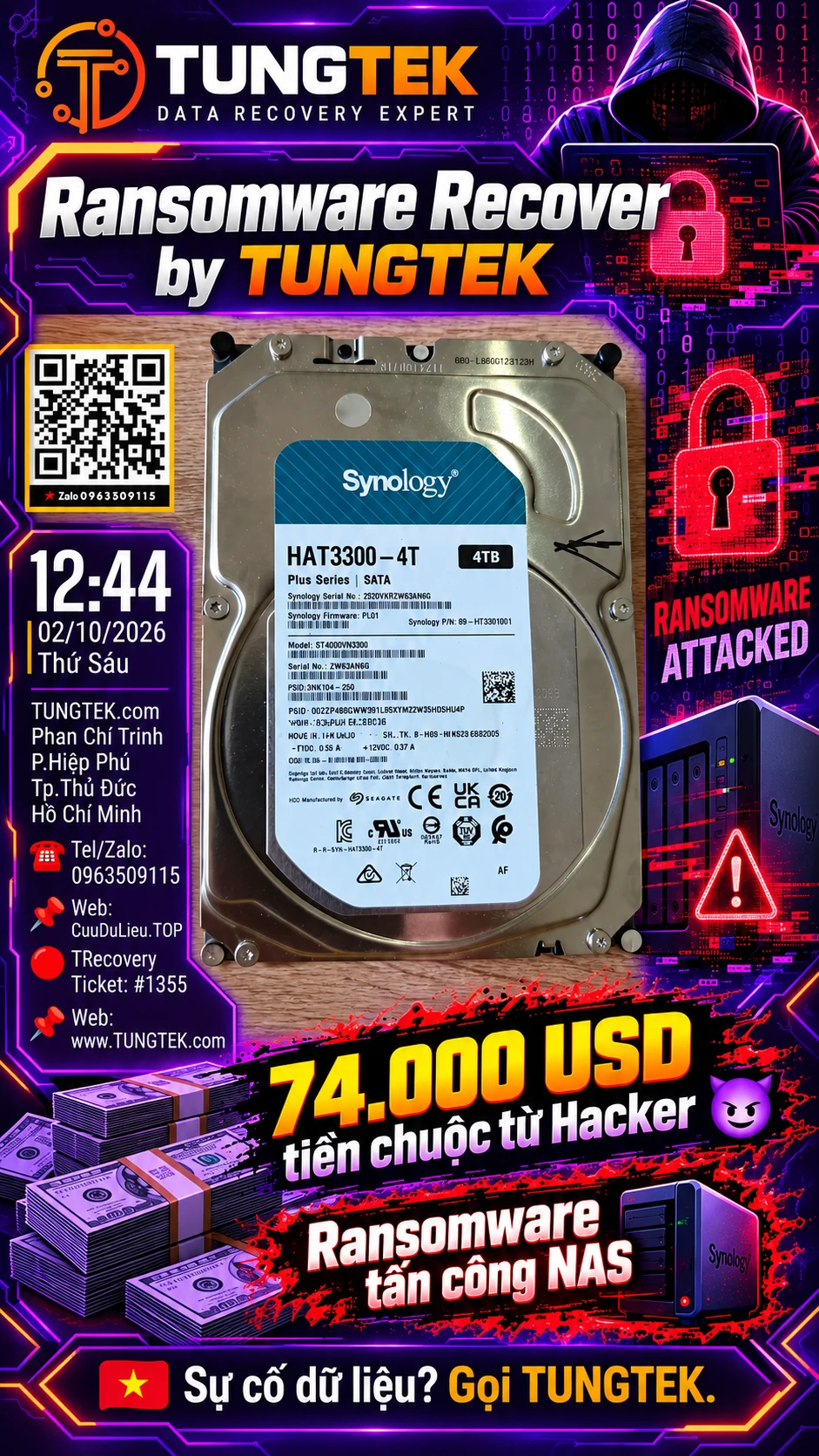
On 03/10/2026, TUNGTEK reported receiving a Synology HAT3300-4T drive for RAID, filesystem and encrypted data extraction analysis in Ticket #1355. The source records a USD 74,000 ransom demand. This is information published by the receiving unit, not independent verification of the attacker's demand.
According to the source, analysis is ongoing. No ransomware family conclusion or recovery outcome has been published.
Technical assessment: a device name does not describe the entire incident
Distinguish a single drive's stated capacity from total system capacity. A received device does not establish the full RAID configuration, drive count, initial access point or number of affected files.
The ransom amount does not measure recovery difficulty. Assessment requires remaining storage structures, altered regions and ways to test extracted file integrity. This is an analytical direction, not a conclusion for Ticket #1355.
Open questions
- No verified intrusion and encryption timeline.
- No malware sample hash, extension, sanitized ransom note or original logs have been disclosed within this article's scope.
- No RFC report, sufficiently representative test sample or usable-data percentage.
- No sufficient public evidence to conclude that data was exfiltrated.
Lessons from reading a case record
A useful report distinguishes observed data, information supplied by one party and unresolved questions. New findings should be added to the update history rather than silently replacing earlier conclusions.
- Preserve originals and record the chain of custody before in-depth analysis.
- Assess recovery on working copies, with acceptance criteria appropriate to each data type.
- Publish results only after checks that can be independently compared.
A ransomware attack on a NAS
A NAS often centralizes shared data, accounting records, projects, images, video, databases, VMs and backups. When a write-enabled account is compromised or ransomware directly reaches shares, that concentration can produce extensive impact quickly.
Trong Ticket #1355, TUNGTEK received a drive from the NAS system for examination. The recorded model is Synology HAT3300-4T – 4TB – SATA.
At intake, one notable detail was the attacker's ransom demand:
The amount creates considerable business pressure, but ransom money is not a technical measure of data recoverability. First determine how ransomware affected the data, which parts remain intact and whether an independent technical recovery route exists.
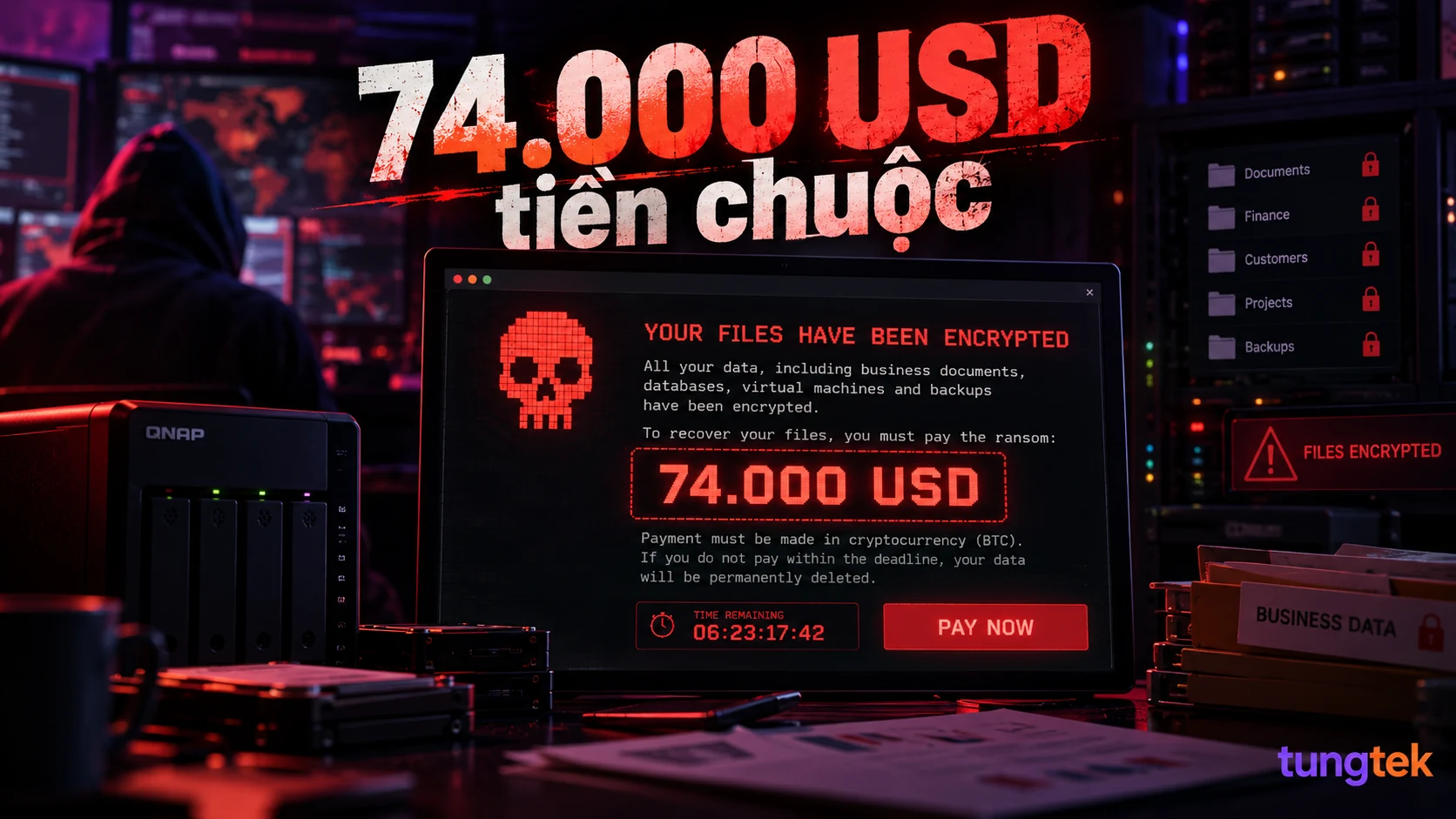
USD 74,000 is not the “price of the data”
Ransom demands often reflect what attackers believe victims can or must pay, not actual technical recovery costs. Attackers may infer scale from domains, databases, VMs, ERP, accounting files, Active Directory, backups or internal data they observe.
Before negotiating or paying, organizations should therefore obtain an independent technical assessment of the affected data itself.
What does TUNGTEK examine first?
1. Encryption scope
- How many folders and files were affected.
- Which extensions changed and which files remain intact.
- Whether files are fully or partially encrypted.
- Whether data was deleted or overwritten.
2. Storage layer
- RAID, volumes and partitions.
- Filesystems and metadata.
- Remaining snapshots, journals and old blocks.
- Low-level reconstruction prospects.
3. Encrypted file samples
- Header, footer, signature.
- Entropy and encryption patterns.
- Intact data regions.
- Extensions, ransom notes and related IOCs.
4. Recovery opportunities
- Extracting unencrypted data portions.
- Filesystem forensic.
- File carving / reconstruction.
- Remaining backups, snapshots or other copies.
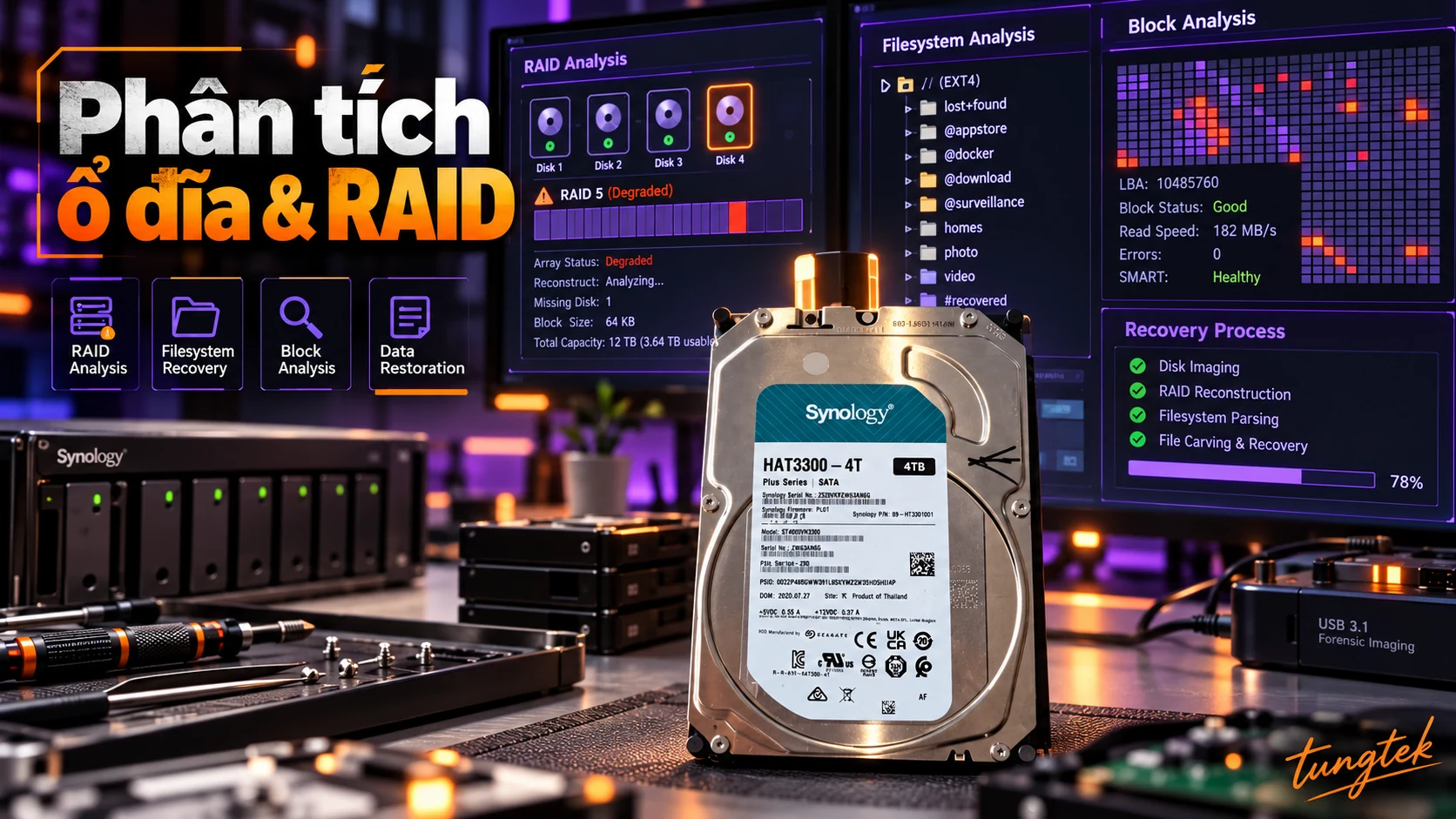
Preserving the current state must precede recovery operations in a ransomware incident.
Ransomware variants are not all alike
Two ransomware-encrypted files may have very different recovery prospects. Some variants encrypt headers, selected blocks or intervals; large files may retain substantial intact regions. Conversely, full encryption with a strong algorithm and unique key, without implementation flaws, can make file-level recovery very difficult.
For large files such as MDF, LDF, VHDX, VMDK, PST, ZIP, databases or video, internal structures and block processing can directly influence recovery strategy. This is why TUNGTEK uses RFC – Ransomware Fast Check to assess samples before treating the entire system.
Do not rush to format or rebuild a NAS
Seemingly reasonable post-incident actions can reduce recovery prospects by writing to source devices. Avoid broad changes before creating a clone/image and a clear forensic plan.
- Formatting volumes or reinitializing drives.
- Uncontrolled RAID rebuilds.
- Resetting a NAS or updating firmware unnecessarily.
- Copying new data onto affected volumes.
- Reinstalling an OS on the same storage regions.
- Deleting encrypted files or running multiple recovery tools directly on source drives.
Paying a ransom is not the first step
Ransomware often applies pressure through countdowns, higher demands, key deletion threats or threatened disclosure. From a recovery perspective, first determine whether an independent technical route exists to retrieve data.
TUNGTEK does not treat ransom payment as the default recovery method. Priorities remain data, RAID, filesystem and ransomware analysis, backups, snapshots and surviving blocks.
Ticket #1355 is approached as a forensic case
The USD 74,000 demand is only part of Ticket #1355. The technical priorities are how much actual data remains, the state of RAID/filesystem structures and an appropriate encrypted-data extraction approach.
A NAS ransomware case may simultaneously involve: Cybersecurity + RAID Recovery + Filesystem Forensics + Data Recovery + Ransomware Analysis. The combination of these technical layers determines actual recovery prospects.
Key lesson: NAS is not backup
RAID maintains availability under supported drive-failure conditions; it does not prevent legitimate accounts from overwriting, deleting or encrypting files. An online NAS accessed through the same permissions may remain within ransomware's impact scope.
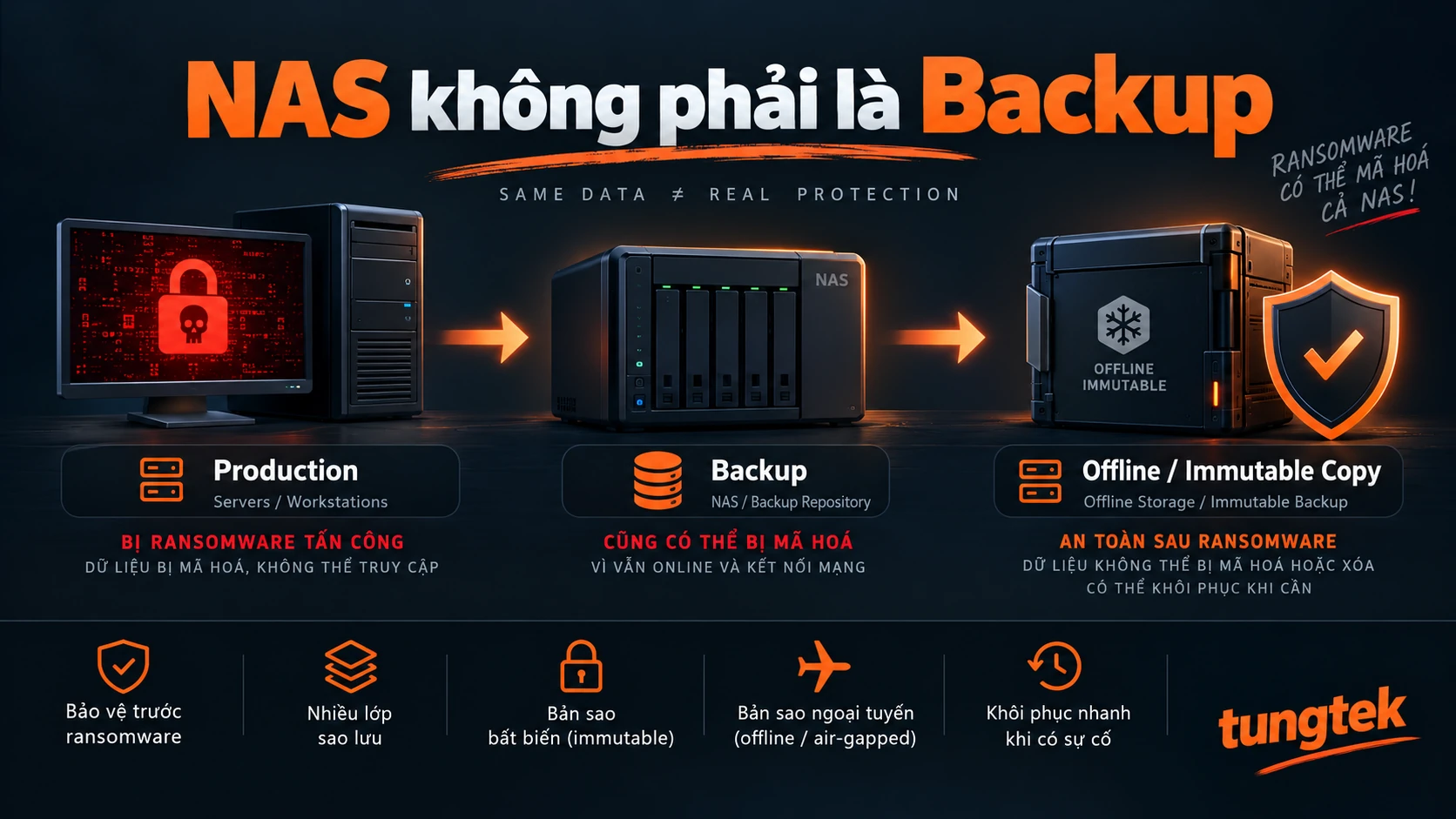
Critical data needs multiple backup layers, including at least one offline, air-gapped or immutable copy. Organizations must also regularly test actual restoration, rather than rely solely on “Backup Successful”.
Communications image for case #1355
Sources
Each source's scope and date are recorded separately when available. A citation does not independently verify every assessment.
Update history
· Added content, images and analysis from the 03/10/2026 Ticket #1355 archive; no duplicate URL or additional recovery outcome published.
· Initial publication with sources and verification limits.
Corrections policy🇻🇳 Data incident? Call TUNGTEK. Service channel: CuuDuLieuMaHoa.com