
Why supermarket freezers became a cyberattack target in Europe
European refrigeration incidents show how altered controller settings can cause physical losses. Here is what Vietnamese operators can check in their remote access and temperature monitoring.
Updated: · Vietnam time (UTC+7)
CERT-FR, the FBI/CISA fact sheet and retailer reporting were reviewed through 6 November 2026. Verification covers publicly reported refrigeration incidents and defensive guidance. Attribution, motives and links between the incidents remain unresolved.
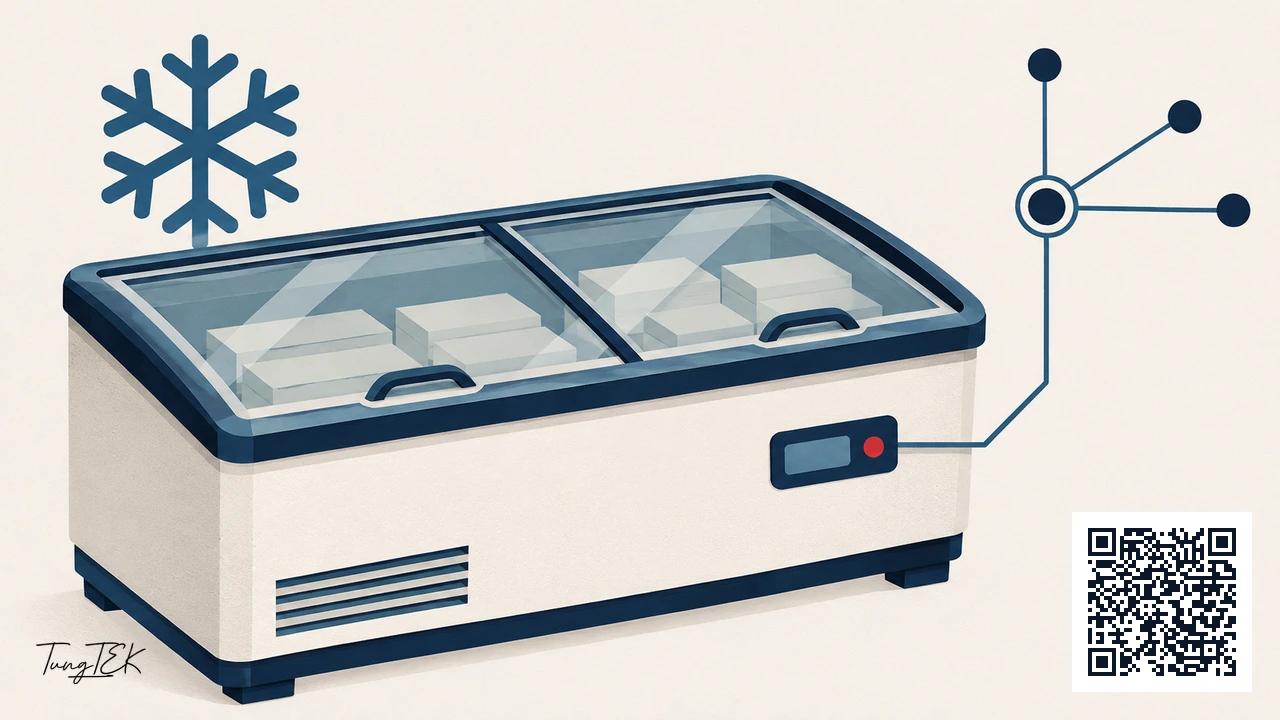
OT security analysis adapted from TUNGTEK’s draft with AI-assisted editing and original editorial illustrations. The QR codes open the Vietnamese edition.
A store can stay open and its computers can keep running while remotely altered refrigeration puts stock at risk. European incidents from October to early November 2026 show how access to a management interface can affect the cooling process itself.
The critical interval is the time between a configuration change and detection by store staff. Restoring the controller and assessing the condition of stock are separate tasks.
Three documented milestones
| Date | Public record |
|---|---|
| 12–16 October 2026 · France | CERT-FR issued and updated an alert about compromised refrigeration controllers, naming Danfoss AK-SM and AK-SC, Copeland XWEB and Dixell XWEB. [1] |
| 2 November 2026 · Europe | Reuters reported incidents at retailers including stores in Sweden, Belgium, Luxembourg and Ireland. Some sites took food off sale. [2] |
| 5 November 2026 · Joint fact sheet | The FBI, CISA and other U.S. agencies warned of attacks on industrial refrigeration and cold chain monitoring and advised operators to reduce exposure and protect remote access. [3] |
An ICA franchise store manager in Stockholm told Reuters that the store’s freezers reached 50°C. The public account describes that location. Assessing stock exposure would require the measurement position, temperature records and the time spent outside storage conditions. [2]
Similarities between incidents can guide an investigation. The sources reviewed leave the relationship between the events, the perpetrators and their motives unresolved. [2] [4]
What can a refrigeration controller change?
Operational technology, or OT, connects software to a physical process. A refrigeration controller can read sensors, maintain setpoints, manage defrost and send alarms. Its capabilities depend on the model and installation. [3] [5]
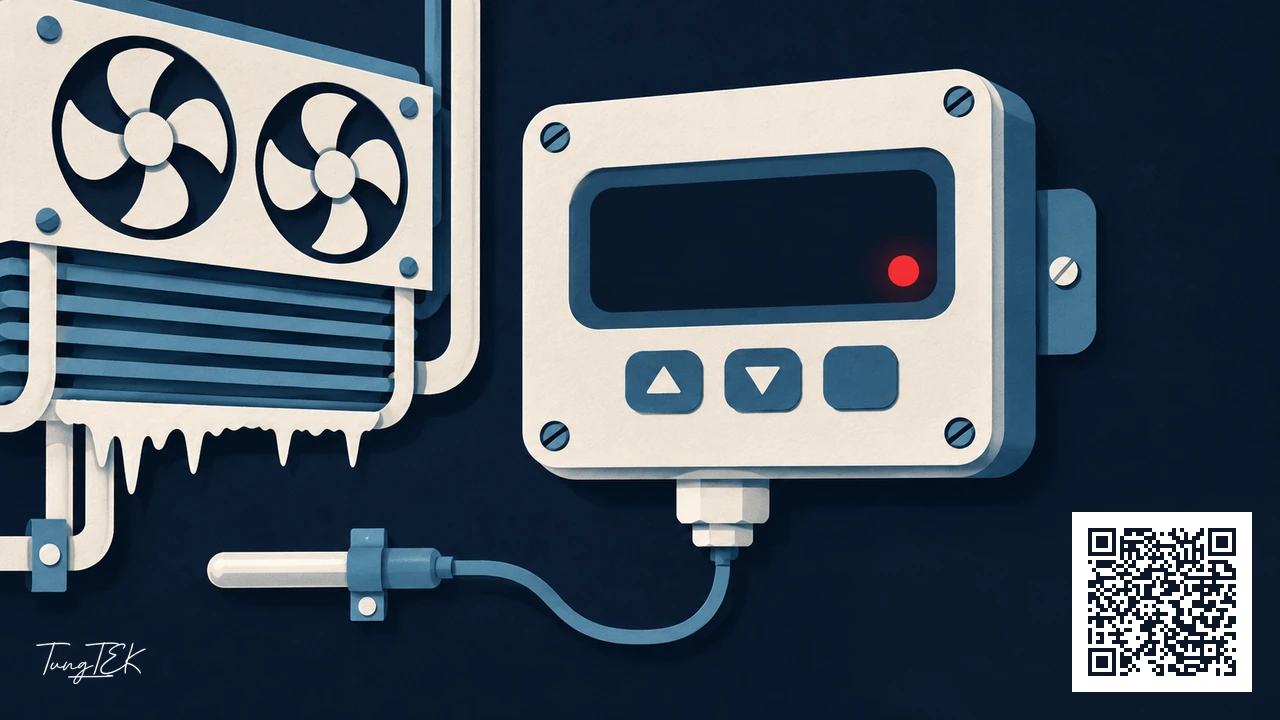
When defrost runs outside its schedule
Defrost clears ice that builds up on a cooling coil. The FBI and CISA describe how attackers could alter settings and force prolonged heating or defrost cycles. Loss of visibility into current temperatures can delay response. Establishing what happened to a particular unit requires comparing configuration, logs and local measurements. [3]
| Data | Question to ask |
|---|---|
| Setpoint | Who or what changed the configured value, and when? |
| Sensor reading | Where is the probe, how long did the reading persist, and can an independent instrument corroborate it? |
| Product condition | How does the quality team assess the type and location of stock and its temperature history? |
Why the cost extends beyond the equipment
A store may need to segregate stock, bring in refrigeration technicians and source replacements. Restoring a configuration can return the unit to operation. Releasing products for sale requires a separate quality decision based on their storage history.
At chain scale, one contractor or maintenance method may serve several sites. Operators need to know which sites share an access path and whether alternative cold storage is available. Disruption depends on the affected sites, duration and available capacity.
Where Vietnamese operators can start
For cold stores, supermarkets, food plants and pharmaceutical warehouses, start with technician access and how staff on duty receive alerts. The measures below draw on CERT-FR, FBI/CISA and NIST guidance and give IT, OT and refrigeration teams a way to check implementation together. [1] [3] [5]
| Priority | How to verify it |
|---|---|
| Inventory devices and access paths | Record model, firmware, owner, router or modem connections and maintenance accounts. Compare the inventory with firewall rules and contractor access lists. |
| Restrict control access | Remove public management exposure after assessing operational dependencies. Route legitimate maintenance through a controlled channel with individual accounts and MFA at the access point where feasible. |
| Segment networks and monitor changes | Permit only necessary traffic between IT and OT. Monitor logins, setpoint changes, defrost schedules and missing sensor signals. |
| Keep a recoverable configuration | Compare firmware with vendor guidance and plan for end-of-support devices. Store an approved configuration separately and test restoration with technicians. |
| Measure and alert independently | Test alarms when the primary sensor source or remote link is unavailable. At critical sites, confirm that the independent channel reaches staff on duty. |
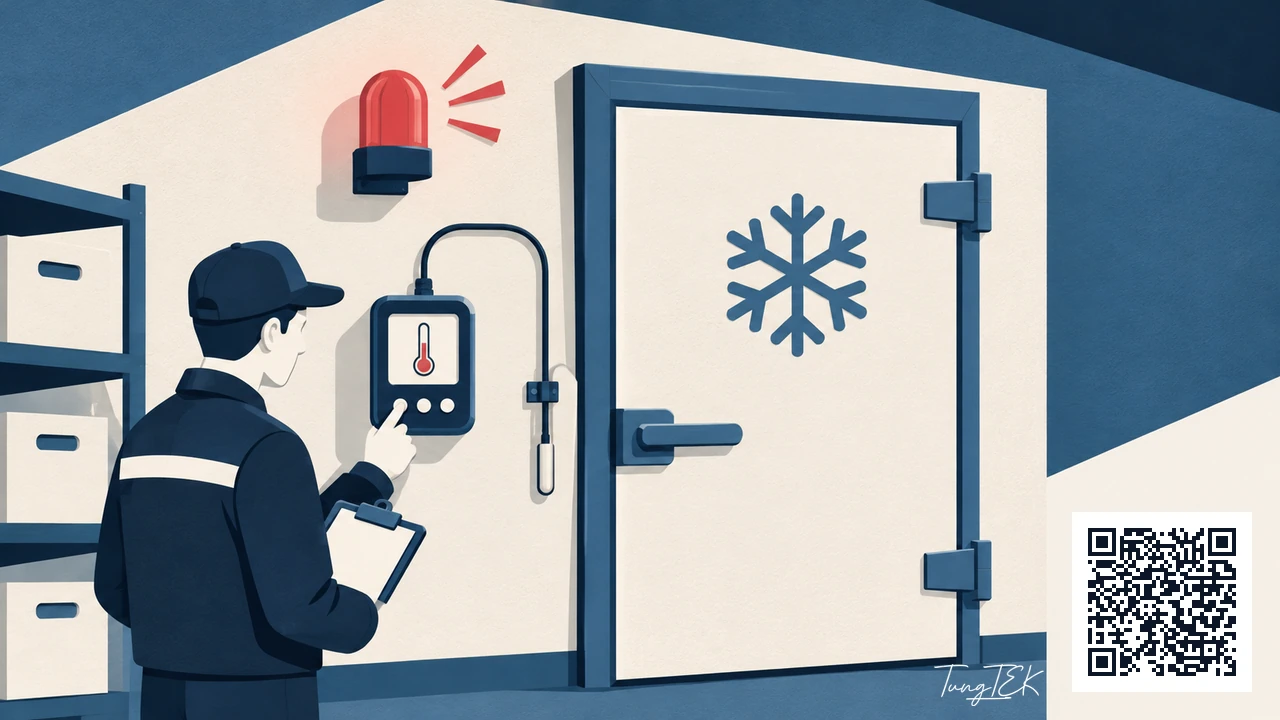
Responding to unusual temperatures or settings
- Notify operations and refrigeration staff. Check conditions at the site with a trusted instrument and record the time.
- Work with the quality team to segregate potentially affected lots and assess them under site procedures.
- Contain the suspected access path. Establish how the unit and its alarms will operate after isolation.
- Preserve logs, current configuration and measurement history where safe. Record the timeline before altering or restoring settings. Restart or reset with vendor guidance and the responsible OT lead’s approval.
- On return to service, check setpoints, defrost, actual measurements and alarms against the agreed procedure.
Exercise loss of remote monitoring
Choose a cold room or display freezer for an approved exercise. Assume the remote monitoring screen cannot be relied on. Measure how long it takes staff to receive the independent alarm, reach the site and decide whether to hold, move or segregate stock. Use the results to identify which response steps need improvement.
Include the controller configuration, a way to check temperature locally and a person authorized to confirm operating conditions in your recovery plan. See the backup and recovery testing guide and guide to building an evidence-based incident timeline.
Sources
Each source's scope and date are recorded separately when available. A citation does not independently verify every assessment.
Update history
· Published Vietnamese and English editions, reviewed the October and November reports, distinguished setpoints from measured temperature and added four QR-equipped illustrations.
· Placed the original transparent TungTEK signature directly on all four illustrations.
Corrections policy