

ClickFix and Python tunnels: detect access before ransomware deployment
A SOC-focused analysis of access evidence, tunneling and assessed ransomware objectives, without speculative family attribution.
Updated: · Vietnam time (UTC+7)
Cross-checked public reports; no samples were executed or original logs examined. This review confirms neither attribution, Vietnam victims nor encryption.
Reference analysis, not a new attack announcement. Each researcher's observations are separated from editorial assessment; individual source dates are listed below.
Evidence: contained before ransomware
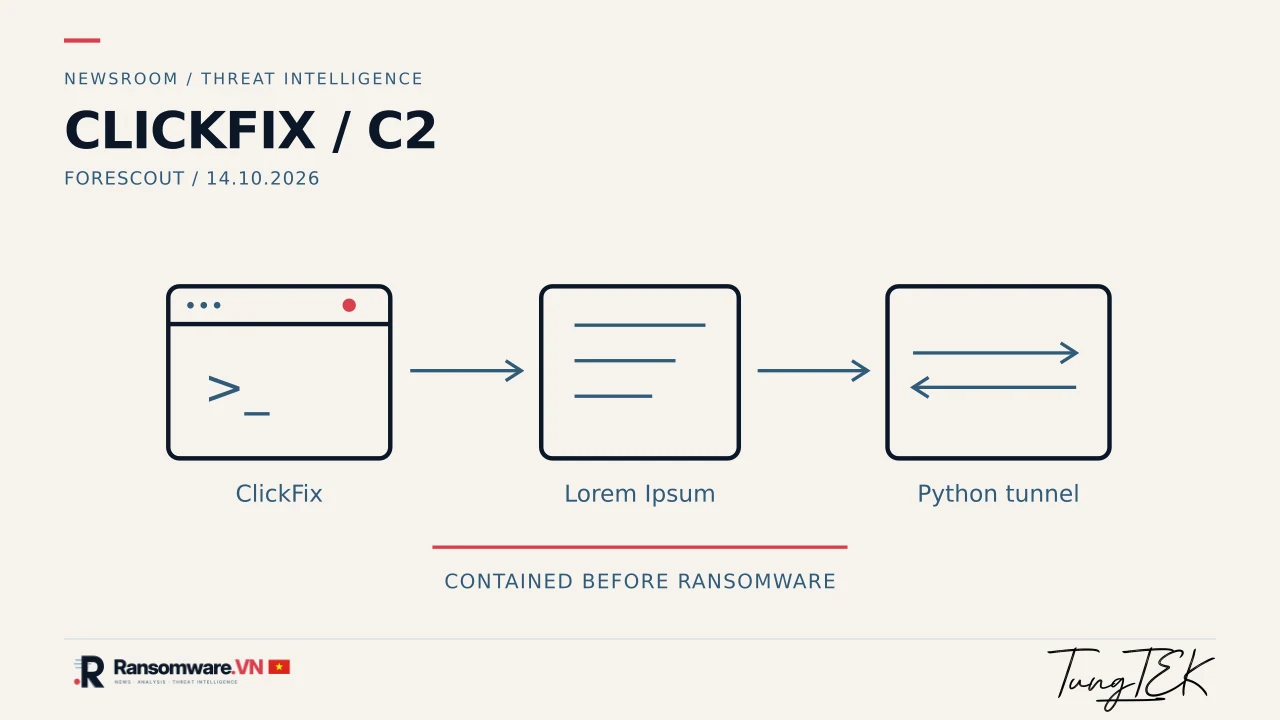
Forescout's 14 October 2026 report describes a late-September case involving ClickFix, Lorem Ipsum Loader and a Python tunnel. It was contained before ransomware deployment; a ransomware objective is the team's assessment.
Previously published technical context
Sophos describes TerminalFix persuading users to run PowerShell, followed by DLL sideloading and Python tunneling. BlueVoyant earlier documented fake browser-update lures. These are references, not confirmation of the same case or actor.
Assessment: correlate behavior
- Include fake verification and update prompts in internal guidance: do not run commands requested by unfamiliar websites; provide an easy incident-reporting channel.
- SOC teams should correlate process trees, DLL loads from user-writable directories and unauthorized tunnels. A standalone PowerShell or Python process does not establish compromise.
- When suspicious activity appears, preserve the timeline and logs, then establish access scope. Do not relabel it as Rhysida or Vice Society merely from a loader name, tool or similarity to other research.
Sources
Each source's scope and date are recorded separately when available. A citation does not independently verify every assessment.
Update history
· Published VI/EN analysis. Separated source observations from editorial assessment, retained distinct source and article dates, and made no family assignment.
Corrections policy