

Endgame disrupts Gootloader, CastleRAT and StealC infrastructure supporting ransomware
DOJ and Europol announced action on 12 November. Infrastructure disruption does not establish that every victim endpoint is clean.
Updated: · Vietnam time (UTC+7)
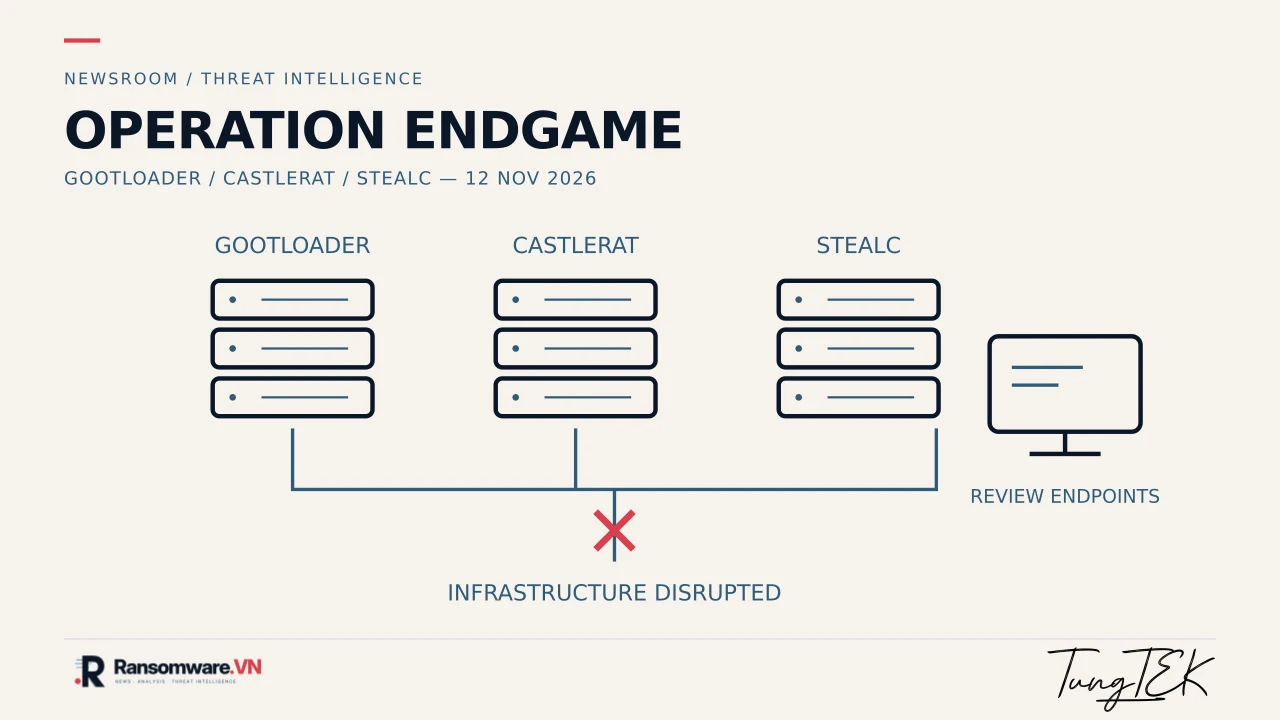
Verified the scope of DOJ and Europol announcements, not individual servers or victim endpoints. No Vietnam incident confirmed.
Sources dated 12 November 2026; published 13 November in Vietnam. No stolen data or inferred unique-victim count is published.
Newly announced action
On 12 November, DOJ reported removing Gootloader from more than 100 servers, including compromised WordPress sites, and seizing US domains. The loader enabled access that could be sold to ransomware actors. These figures and descriptions come from investigators. [S1]
More than one malware toolkit
Europol described coordinated Endgame action against Gootloader, CastleRAT and StealC: loading, remote-control and credential-theft tools that can enable further intrusions. Authorities and partners are notifying victims. Infection does not establish that each endpoint was encrypted by ransomware. [S2]
What businesses should consider
Editorial assessment: interrupted infrastructure does not prove an endpoint is clean or credentials remain safe. On receiving a legitimate notification, IT teams should investigate affected devices and identities, preserve logs and follow their response process. Do not submit passwords to unsolicited sites claiming to offer post-operation assistance.
Sources
Each source's scope and date are recorded separately when available. A citation does not independently verify every assessment.
Update history
· Published VI/EN coverage of the 12 November announcements, distinguishing infrastructure disruption from endpoint remediation, with original-logo/signature event artwork.
Corrections policy